




By Sandy Yong
You’ve created a budget and have tried time and again to get a handle on your spending. But every month, it seems like you’re spending beyond your means. You may have thought about switching to a cash-only budgeting system for a month to see what it feels like, but are unsure of how to start.
Living on an all-cash budget can help to control your spending and undo some poor money habits. If you’re interested in learning how the process works, follow along as we explain the steps and the considerations.
The Spending Mindset
There’s an emotional difference in how people spend their money in physical cash versus digital currency. According to WalletHub, national credit card debt totals $1.35 trillion. The average credit card balance is $11,153 per American household.
When you tap or swipe your debit or credit card, you don’t really feel the emotions of how much you’re spending. Furthermore, when you pay with a plastic card instead of cash, it can be tempting to make more impulsive purchases (which you may regret later).
On the other hand, when you take out paper bills and coins and count out the money, you’re more inclined to feel the emotional weight of giving away your money. That’s why those who follow the cash-only method can feel real emotions when they part with their money.
Create an Envelope System
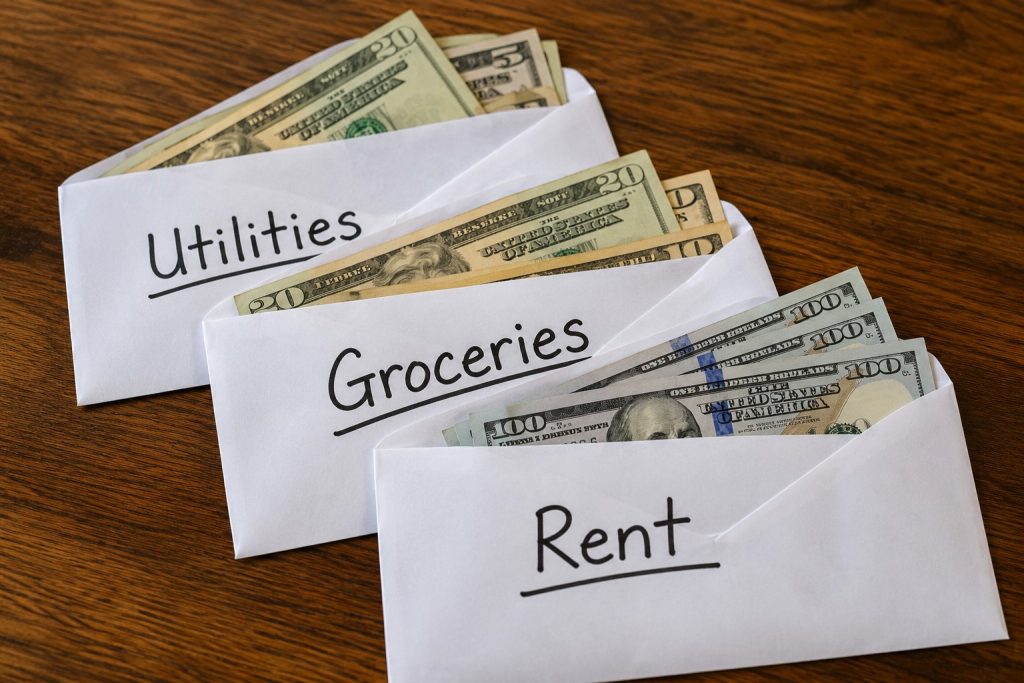
Follow these simple steps to build your cash-only budgeting system:
Step 1: Create a budget to track your income and expenses. Review your past bank and credit card statements. You’ll have fixed expenses such as rent or mortgage payments and utilities. There are also variable expenses that could fluctuate, such as groceries, entertainment, and gas.
Step 2: Decide how much you’re going to spend for the month. Based on your budgeting exercise, you’ll know how much you need to set aside for the month.
Step 3: Start by creating labeled envelopes. You might have one for groceries, dining out, transportation, clothing, and entertainment. You’ll know based on the expenses exercise you completed above.
Step 4: Hide your debit cards and credit cards. Leave them at home or store them away where you can’t see them. You don’t want to be tempted to use them.
Step 5: Take your cash and divide it amongst the envelopes. Now you will have a set amount for each category for the month. For example, you may allocate $400 to groceries or set aside $85 a week for meals or coffees at work.
Step 6: When you go to the store, you’ll bring that cash envelope with you to make your purchase. When you’re at the cash register, you pay with the money from the envelope, and the receipt goes into the envelope for tracking purposes.
Step 7: Once you’ve spent all the money in your envelope for the week (or month), you won’t be able to spend any more in that category. However, you can give yourself some flexibility to move the cash between envelopes if needed. You may discover that you’ve put too much into one envelope and not enough in another. So you can decide on any necessary adjustments.
Benefits and Drawbacks of the Envelope Method
There are a few considerations to keep in mind before you start this process. Here’s what you should expect:
Pros
What’s great about implementing the envelope system is that you can tangibly see the amount of money you have left over at the end of the month. This exercise can help you avoid overspending and make more mindful purchases. You can also avoid any overdraft fees from your bank and the accumulation of interest on your credit card.
When you spend with cash, you’re keeping your spending habits private. Given that data breaches are becoming more common, your transactions aren’t at risk of data leaks.
Cons
After the pandemic, many businesses prefer cashless payment. As a result, managing online subscriptions and in-store payments is a bit challenging. Realistically, it would make sense to have a digital allowance or bank account that helps to cover ongoing expenses like your rent, utilities, or cell phone bill.
Another drawback is that frequent ATM withdrawals can incur fees. So, you may want to plan ahead and limit the number of visits or stay within your bank’s ATM network.
Keep in mind that when you’re using a cash-only system, you’re not building your credit history. It’s important to continually build your credit history as it can help to improve your credit score. This will have an impact down the road when you choose to take out a loan or a mortgage. If you’re trialing this cash method for only a month, it won’t make a big impact.
Setting Priorities
When you’re living on only cash, you may realize that you’ll need to set your priorities. You may come across instances where you have to choose between items because you don’t have enough to buy all the things you want. This comes down to understanding your wants versus your needs. As such, you may need to prioritize buying a meal and delay purchasing a brand-new pair of shoes.
Keeping Your Money Safe
It may be tempting to carry all your envelopes with you. However, try not to carry all of them everywhere you go. Because if you lose your money, it’s gone and you likely won’t be able to retrieve it. A smart way is to carry a few days’ worth of cash with you instead. Then you can leave the remaining money at home in a secure place.
Time for Reflection
At the end of the month, it’s a good time to reflect on your experience. Ask yourself the following questions:
- Did you give yourself enough cash to spend in each envelope?
- Did you have to make some tough money decisions?
- Did your spending habits change over the course of the month?
- What did you learn about yourself through this exercise?
Go through each envelope and record your receipts in a spreadsheet or a log. Did any of the transactions surprise you? By reviewing all your purchases, you may come to learn a few new things about yourself.
FAQ
How much cash should you have for monthly expenses?
The amount you need to set aside for your monthly expenses depends on your budget. Each individual has their own set of expenses. Be sure to understand both your fixed and variable expenses.
Is it a good idea to only use cash?
Living on cash only can help curb spending and avoid bank fees, but it also has several drawbacks. The main disadvantage is that you’re not able to build your credit history, which plays a role later on when you need to borrow money from a lender. You also can’t use cash for online purchases.
Who benefits the most from the cash-only system?
Those who want to help keep their spending in line. However, it may still be helpful to record every time you’re paying with cash on your phone or in a notebook. That way, you can create a log of where your money is going.
Why should I use an all-cash diet?
If you want to reduce your spending and be more mindful of your purchases, an all-cash budgeting system could be a helpful way to gain more clarity and improve your money habits. It forces you to figure out your wants and needs and not overspend in any category.
Our articles provide information purely for educational purposes and do not constitute financial, tax or investment advice. You should always consult with professionals like licensed financial advisors or accountants before making any decisions. We aim to provide up-to-date and accurate information, but we make no guarantees regarding the accuracy or completeness of any content. All our examples are provided for illustrative purposes and may not reflect your personal results. We are not liable for any losses or damages arising from your reliance on the information provided.
Sources:
- https://www.forbes.com/sites/mayakachroolevine/2016/08/02/heres-what-happened-when-i-tried-a-cash-only-budget-for-one-month/
- https://nomoredebts.org/blog/manage-money-better/cash-only-diet-for-debt-repayment
- https://www.sofi.com/learn/content/cash-only-living-pros-and-cons/
- https://www.farber.ca/blog/living-on-an-all-cash-diet
- https://finance.yahoo.com/news/paid-everything-cash-months-learned-170054842.html
- https://moneymentors.ca/money-tips/cash-only-budget/
- https://www.nbcnews.com/better/pop-culture/how-save-money-cash-only-budgeting-system-ncna902516
- https://happybank.com/resources/reduce-your-spending-with-an-all-cash-diet/
- https://wallethub.com/edu/cc/credit-card-debt-study/24400
