



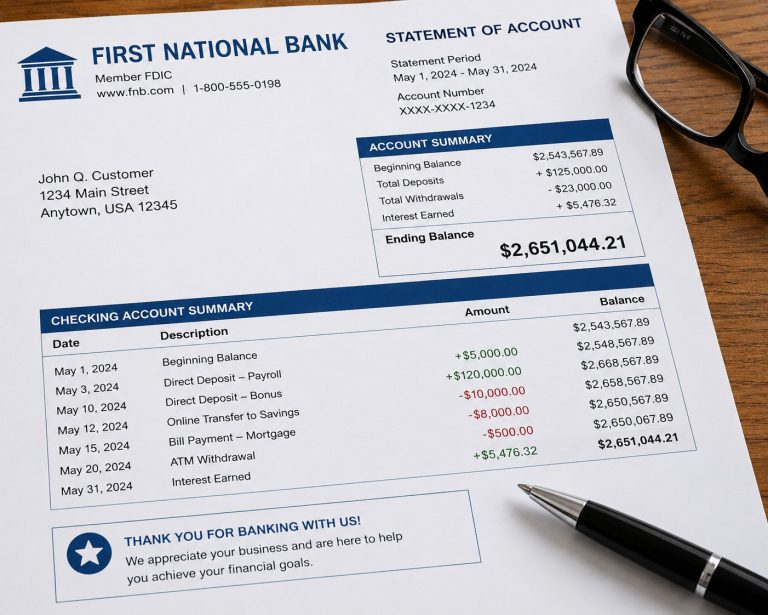
In a world of rising inflation, high interest rates, and crushing debt, it’s no wonder that people are questioning their finances and wondering how much money they need to feel comfortable. In a 2025 survey, the share of Americans who don’t feel completely financially secure rose to 77%. Financial comfort means something different to each person, but it typically revolves around how much you make, what your assets are worth, or how much you owe.
What Does Financially Comfortable Mean?
Feeling “financially comfortable” is inherently subjective. For some people, it means owning a home or earning six figures, while for others it means being able to buy anything you want or being debt-free. The bottom line is that financial comfort isn’t a single number or metric. It’s a combination of income, assets, and debt. And the key to feeling comfortable is understanding where you stand, what your goals are, and having a plan on how to get there.
Net Worth
According to Charles Schwab’s 2025 Modern Wealth Survey, Americans believe it takes $839,000 in net worth to be “financially comfortable.” This year’s number is up almost 8% from the $778,000 they said they needed in 2024.
Comfortable doesn’t necessarily mean “wealthy.” The same Charles Schwab survey found that Americans say they need $2.3M to feel wealthy. To me, this reinforces the idea that no matter how much money you have, you always feel like you need a little bit more. Even the wealthiest billionaires on the planet, like Elon Musk and Jeffrey Bezos, are still working to increase their net worth.
Often, the biggest factor people consider when thinking about assets is their nest egg. I think about how much I need to retire on a regular basis. Although I love the work I do, retiring sounds pretty great. I feel comfortable with where I’m at for my age, but I know that I need to grow my investments a lot more before I could fully retire and maintain my current lifestyle.
How to Calculate Net Worth?
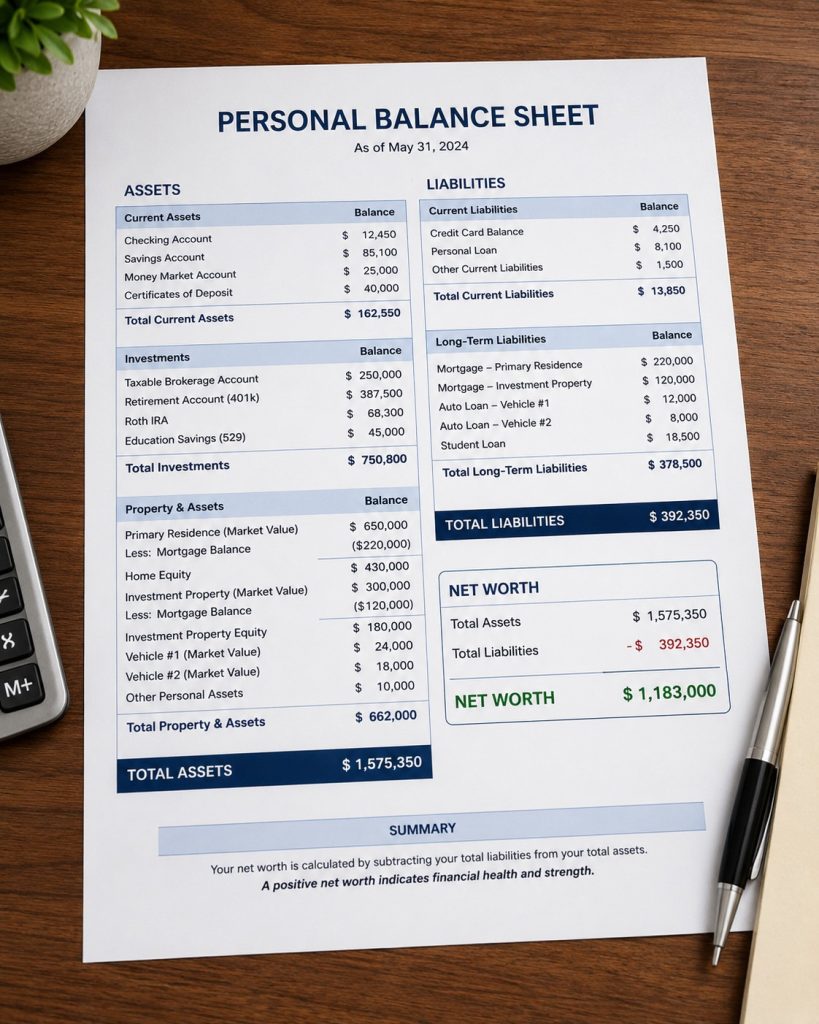
Net worth is the difference between the value of your assets and how much you owe. The higher the number, the better off you are.
Many younger investors start off with a negative net worth because they often graduate with student loan debt and haven’t earned enough to save for retirement or to buy a home. Over time, your net worth grows from regular 401k contributions, annual returns on investments, home appreciation, and paying down debt.
My wife and I do a deep dive into our finances once a quarter to discuss how much we’re saving, how our investments are performing, and how much we’ve been able to pay down our debt. While our biggest debt is our mortgage, we now have an auto loan after a recent car accident. And we regularly monitor our credit card balances, especially after making big purchases, like an annual family vacation or projects around the house.
Factors That Affect Net Worth
Annual Income
Even if you have sizeable wealth, it’s important to distinguish wealth from income. You can’t take money from your home equity without selling it or taking on more debt. To cover your monthly bills, you’ll need income or cash in the bank.
Almost half of Americans (45%) say they need a six-figure annual income to be financially secure or comfortable. More than a quarter of those surveyed said they need $150,000 or more. In my experience, the rising cost of living and higher interest rates will continue to push this number even higher since everything from eggs to gas to credit card bills cost more today than they did five years ago.
While so many people say they need to earn $100,000 or more to feel comfortable, the median U.S. income is just over $60,000. So, there’s a big disconnect between what people feel and reality.
To make matters worse, if you don’t feel comfortable with your income and struggle to pay your bills on time, there’s little room to save for the future. If you’re struggling with your monthly budget, consider this framework that I’ve used with my clients. It’s called the 50/30/20 Rule. From your take-home pay (paycheck after taxes and insurance), divide your money this way:
- 50% towards needs (housing, groceries, utilities)
- 30% toward wants (entertainment, clothing, dining out)
- 20% toward savings/debt (401k and Roth IRA contributions, credit cards, auto loan, emergency fund)
Assets
Your assets are all of the items that you own. While you may have spent a lot of money on items like clothing and electronics, we’re talking about the major assets like your home, investments, bank accounts, and vehicles.
While a home and a 401(k) make up much of your wealth, you normally won’t touch them for everyday living expenses. That’s why liquid assets, like checking and savings accounts, are so important in how comfortable you are financially. If you own a home with $100,000 in equity, but your bank account is overdrawn, you’re going to feel stressed out.
A 2019 survey from the Federal Reserve found that 39% of U.S. adults report lacking sufficient liquidity to cover even a modest $400 emergency without borrowing or selling an asset. Since everyday costs from groceries to gasoline to rent have risen substantially since then, it’s likely that this number is even higher today. For this reason, one of the first things I recommend clients do is start putting money into an emergency fund. While the ideal number is 3 to 6 months’ of expenses, even saving $1,000 would be life-changing for many people.
Assets make up the bulk of your net worth, yet many of them are financed, which brings us to how much you owe.
Debt
Debt is the money you owe. Whether it’s the mortgage on your home, a car loan, unpaid medical bills, or the latest credit card statement, debt can touch every aspect of your life. Debt can be good or bad, depending on how it is used.
Good debt helps propel your life forward toward the goal of being financially comfortable. Student loans to learn new skills or qualify for a better-paying job, or A mortgage to buy your home. Bad debt is borrowing money to enjoy something today at the expense of your future paychecks. These splurges may include a shopping spree, a theme park vacation, or the latest iPhone.
One of the keys toward feeling financially comfortable is avoiding high-interest debt. About 26% of Americans cite high or revolving debt as a factor keeping them from feeling financially secure. With the average credit card interest rate near 24%, avoiding credit card debt is essential to reaching your goals.
While bad debt may feel good in the moment, it often leads to more stress down the road.
Paying off debt can be exciting and fulfilling. About 15 years ago, I focused on a path toward becoming debt-free. I’m not there yet, but I’m making major progress toward that goal. When I paid off my car loan, I used that amount to pay extra toward my student loans each month. With that focus, I paid them off six years early and now have extra money to invest and accelerate the payoff of my mortgage.
The Psychology of “Enough”
How much is “enough” when talking about money? What it takes to feel financially comfortable varies from one person to the next. Factors like family size, location, spending habits, goals, how you were raised, and debt go into the “number” you need to feel comfortable. In fact, two people with the exact same salary may feel completely different about their money situation.
In my experience, someone earning $150,000 in New York City may feel financially stressed, while someone with the same salary in Oklahoma might feel more secure. In San Francisco, residents say they need a net worth of $1.5 million to feel comfortable. That’s the highest among 12 major U.S. cities surveyed.
Similarly, two people living in the same city might feel completely different about the same income. A single person living in an apartment would have more disposable income than someone with a mortgage and three kids.
When thinking about how much is enough, consider where you live now versus where you want to be in the future. We used to live in Southern California, but moved to Nashville almost a decade ago. While we miss our friends and the weather, our cost of living is much lower here, which brings us much closer to the financially comfortable goals we’ve set for our family.
Conclusion
Feeling financially comfortable means something different to each person. Typically, it isn’t a single number. Instead, it’s a balance between earning enough, accumulating assets, and avoiding bad debt. One of the best pieces of financial advice I give is to focus on cash flow. By setting attainable goals based on how much you make, you can save for the future while quickly paying down today’s debt. Have regular conversations with your family about money, and get everyone to agree on family goals and understand how their actions affect how quickly you can reach them.
Our articles provide information purely for educational purposes and do not constitute financial, tax or investment advice. You should always consult with professionals like licensed financial advisors or accountants before making any decisions. We aim to provide up-to-date and accurate information, but we make no guarantees regarding the accuracy or completeness of any content. All our examples are provided for illustrative purposes and may not reflect your personal results. We are not liable for any losses or damages arising from your reliance on the information provided.
Sources
- Live Fox Now, Here’s the salary you need to be ‘financially secure’ in 2025. Published June 23, 2025.
- Charles Schwab, Americans Say It Takes More Money to Be Financially Comfortable Now Than It Did a Year Ago According to Schwab Survey. Published July 9, 2025.
- Money, Are You ‘Wealthy’ or Just ‘Comfortable’? Here’s the Difference. Published July 9, 2025.
- CBS News, How much do you need to earn to feel financially secure? At least six figures, many Americans say. Published June 24, 2025.
- Brookings, Financial well-being: Measuring financial perceptions and experiences in low- and moderate-income households. Published December 13, 2019.
- Federal Reserve, Report on the Economic Well-Being of U.S. Households in 2018 – May 2019. Published May 2019.
- AOL, What annual salary would make you feel financially secure? Here’s what Americans said. Published July 7, 2023.
- Bankrate, Average Credit Card Interest Rate in US Today. Published May 19, 2026.
- CNBC, How much money you need to be financially comfortable in 12 major U.S. cities. Published August 23, 2024.
