



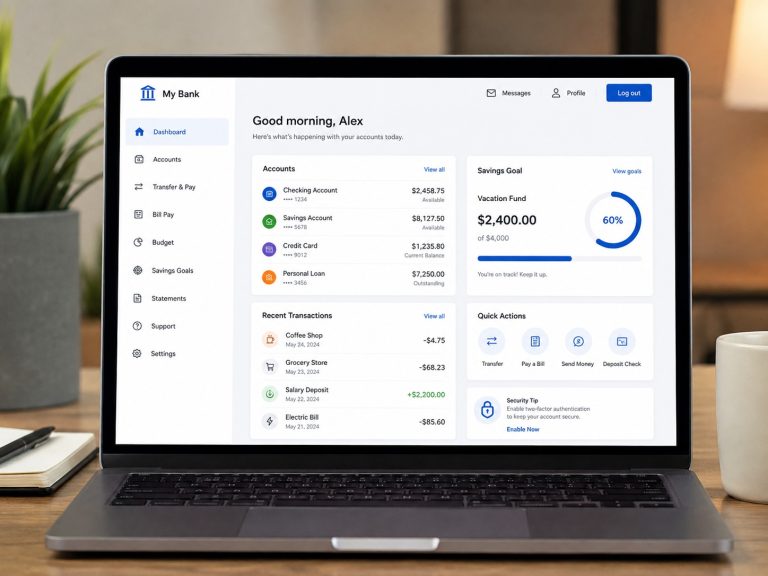
To be financially successful, it requires discipline and consistency. As humans, it can feel overwhelming trying to build good money habits. One measure of financial success is being ready for retirement. In a recent survey from Schroders, they found that 51% expect to have less than $500,000 in savings at retirement. Clearly, there is a gap between how much they should save and how much they actually save.
The good news is that you can incorporate automated money systems so that you don’t need to monitor your personal finances constantly. Plus, it’ll help you save time and stay on track with your financial goals.
With banking automation tools, you can set up a financial system so that your transactions are done for you. In this article, I’ll guide you through strategies that save you time and reduce human error.
The Benefits of Automating Your Banking Tasks
Let me illustrate what it would be like without any automation. First, you would need to track your earnings and expenses manually. Categorizing every transaction would be very time-consuming and mundane. Then you would need to be very disciplined to set aside savings regularly. The same consistency would be required when investing your money to grow your wealth.
On top of that, you would need to remember every due date for bill payments, which can be complicated if you have multiple credit cards (having one for personal, business, or a joint credit card with a partner). If you ever miss a due date, you will incur late fees, and it would lower your credit score. As you can see, it could take up mental load for repeated financial decisions.
Fortunately, you can make life easier by integrating banking automation so that you can consistently save and invest your money, pay your bills on time, and avoid any interest charges. With an automated money system set up properly, you can free up your time and focus on more important priorities.
Set Up the Proper Accounts
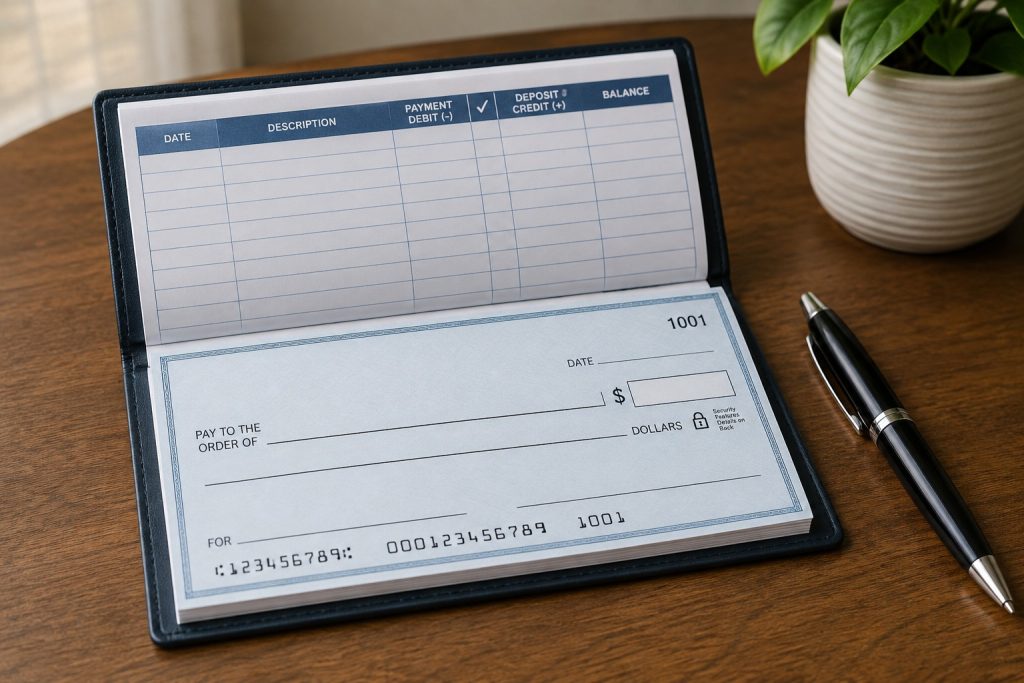
The first step to creating a financial ecosystem is to set up dedicated accounts. For the majority of people, they should have a financial structure that comprises:
- A checking account where you receive your paycheck and transfer outgoing funds.
- Multiple savings accounts that help you build your emergency savings fund and track your savings goals.
- Investment accounts that focus on your retirement, healthcare costs, and education plan. You may also have employer-sponsored retirement accounts.
You’ll also have at least one credit card to account for daily purchases, which also helps you build your credit history. It’s important to have enough money in these accounts so that if you’re using them to pay expenses, you don’t run out of money and trigger overdraft protection, which could be costly. Consider enabling push notifications so your financial institution alerts you when your balance is low.
Personally, I consolidated all my bank accounts into one financial institution rather than having them scattered across multiple banking platforms. Ever since, it’s been easier to track and automate my personal finances in one place.
Determine Your Budget
Create a budget to help you sort out your finances. That way you know where your money is coming in and going out. A realistic budget will help you understand how much money goes towards different categories.
From a high-level perspective, you should see all your income sources, the various expense categories, which types of debt you’re paying down, the savings goals you’re working towards, and the investments to help grow your long-term wealth. There are different budgeting apps and methods you can use to help you manage your money.
Make Recurring Payments for Bills and Subscriptions
Find out all the recurring payments you make monthly. It could be mortgage or rent payments, insurance, subscriptions, memberships, childcare payments, or utilities. It may be helpful to funnel them on a dedicated credit card or a bank account.
You can set the credit card to autopay the full balance every month. You want to avoid simply paying off the minimum balance, because you’ll incur hefty interest charges and it will hurt your credit score. This tactic reduces the risk of missing a payment date and prevents the accumulation of late charges. Remember that even though it’s helpful to set these on autopilot, you still want to periodically check the transactions to ensure there are no suspicious transactions or unexpected price increases.
Automate Your Debt Payments
According to Debt.org, 90% of Americans have some form of debt. You might carry credit card debt, student loans, a mortgage, auto loan, or a line of credit. To increase your net worth, it’s important to pay down your debt.
The two classic approaches are the debt avalanche and the debt snowball methods. Consider automating your debt payments so that you’re gradually reducing your debt load. For example, you can autopay your credit card bills or set a recurring pre-authorized debit transaction from your bank account to pay for your mortgage. Occasionally, you may have extra funds. Instead of spending it all, you could increase your debt payment amount to help pay it down faster.
Set Aside Savings
When you get paid, ideally, you want to take a portion of your paycheck and allocate it towards your short-term or medium-term savings goals. You might want to put some money into your emergency fund, a vacation, or to buy a new electronic device. Setting up automated transfers between your checking and savings accounts can make it easier to manage your finances effortlessly. Moreover, prioritizing your savings goals can help reduce your discretionary spending. So, you’re essentially spending what’s leftover.
You don’t need to stash away large amounts of money. Even small amounts can make a difference over time. For example, round-up apps may be useful for taking your “spare change” and directing it toward your savings account or investments.
Automate Your Investment Contributions
The next step is to build your wealth sustainably over the long term. You may have investment accounts through your employer, 401(k) or 403(b), 529 plans, or an IRA. You could make automatic payroll deductions that go directly into your employer-sponsored retirement accounts. Alternatively, if you get paid biweekly, you could set up investment contributions on your payday.
In a new TIAA survey, 76% of retirees say that they regret not starting to save earlier in their lives, while 71% wished they had saved more. This shows the importance of saving for retirement early in your career and being consistent.
A main benefit of automating your investments is that you can use dollar cost averaging (DCA). This is where you take an amount of money and purchase at scheduled intervals, say, a stock or a bond that you buy monthly, no matter if the price is up or down. You can choose the amount and type of investment product you want to invest. This takes the guesswork and emotions out of investing.
Boosting Your Savings Rate
If you earn a promotion, receive a raise or a bonus, it means your income is growing. Don’t let lifestyle creep set in. Be proactive and boost your savings accordingly. Review your contribution rate and make adjustments annually. This practice will help you stay on track with your investment goals.
By automating your finances, you’ll be able to be more hands-off and have more time to focus on other things in your life. Plus, it’ll help you work towards achieving your financial goals.
Our articles provide information purely for educational purposes and do not constitute financial, tax or investment advice. You should always consult with professionals like licensed financial advisors or accountants before making any decisions. We aim to provide up-to-date and accurate information, but we make no guarantees regarding the accuracy or completeness of any content. All our examples are provided for illustrative purposes and may not reflect your personal results. We are not liable for any losses or damages arising from your reliance on the information provided.
Sources:
- https://www.plancorp.com/blog/automate-finances
- https://aifinsage.com/best-ai-finance-tools-2026/
- https://finance.yahoo.com/markets/article/one-third-of-investors-have-more-credit-card-debt-than-retirement-savings-survey-141940166.html?soc_src=social-sh&soc_trk=linkedin
- https://www.investopedia.com/terms/1/529plan.asp
- https://www.experian.com/blogs/ask-experian/steps-to-streamline-your-finances/
- https://ca.finance.yahoo.com/news/76-american-retirees-big-savings-090000254.html
- https://www.schroders.com/en-us/us/institutional/clients/defined-contribution/schroders-us-retirement-survey/readiness/
- https://www.tiaa.org/public/about-tiaa/news-press/press-releases/2026/07-22
- https://www.debt.org/faqs/americans-in-debt/demographics/
