




While I’ve loved a lot about freelancing over the past 16 years, I sure underestimated how it would complicate my taxes. Freelancers have to cover the employer’s part of Medicare and Social Security taxes, figure out their own on-time tax payments, and make decisions on writing off expenses. Early on, I definitely made mistakes that led to a higher tax bill than necessary.
Thankfully, my financial education background and freelancing experience over the years have taught me how to cut my tax bill. Some of my strategies are about deducting business costs. Others focus more on handling tax payments and other issues freelancers often struggle with. I’ll walk you through what I do so you can possibly reduce your freelancer tax bill as well.
Get My “Automatic” Tax Breaks
My favorite freelance tax breaks are the ones that don’t require me to do anything special. Some of those are available regardless of your employment situation, like the standard deduction. But I especially like being able to deduct around half my self-employment taxes as a freelancer. That one reduces my adjusted gross income by several thousand dollars each year.
Another automatic tax break is the qualified business income deduction. It’s worth as much as 20% of my eligible freelance income but is realistically closer to 15% based on my recent tax returns. That one lowers my taxable income. While this doesn’t apply to my freelance writing and editing work, the qualified business income deduction has special rules for certain service and trade occupations. That could mean losing some or all of the deduction.
Write Off My Everyday Business Expenses
As a freelancer, I pay for a lot of things that employers usually help with. My health insurance plan and add-ons, disability coverage, a work phone, software for my computer, finance education membership fees, online portfolio subscription, and so on. This all costs me thousands each year.
Tracking everything carefully gives me an advantage here. I can deduct all these expenses on my freelance tax return. So, $5,000 in hypothetical business expenses lowers my taxable freelance work profit by the same amount. Sometimes, it’s enough to keep me from moving to a higher tax bracket, such as 12% to 22%.
Any freelancer has to be careful, though. The IRS has strict rules about “ordinary and necessary” expenses. And it’s even less straightforward when the expense is partly personal. For example, you might use your personal cell phone sometimes to take calls from clients. I never would deduct something questionable. It’s not worth it.
These rules are why I don’t bother with the home office deduction. I do have a main workspace. But that same room is also used for many non-work purposes. Then, sometimes I work from my kitchen or a hotel. I also don’t think the deduction for my small space would cut my tax bill that much.
Time My Big Business Purchases Carefully
My freelance writing and editing work doesn’t require much besides a good computer and a few accessories. But I still must replace these things when they wear out. Thankfully, tax breaks help offset the cost. The benefit is even nicer when I buy things in a year when I’m in a higher tax bracket.
When I replaced my computer, I was able to immediately deduct the business use portion of over half the cost on that year’s tax return. That saved me about $260. Be aware the IRS allows this for certain business equipment costing $2,500 or less. For other purchases, freelancers may need to write off part of the cost over several years. That means less tax savings upfront.
Save for My Retirement With a Traditional IRA
Freelancing also doesn’t give me the typical 401(k) that many employees contribute to. So I can save money for retirement and get a similar tax break, I’ve chosen to put at least $500 per month in a traditional IRA I opened online. Since I’m a single filer with no employer plan, I can deduct contributions up to the full yearly limit. That’s currently $7,500 for my age.
I still pay Medicare and Social Security taxes each year on this money. But I postpone paying income taxes on it (and the investment gains) until I start withdrawing the money, probably sometime in my 60s. In the meantime, even a $6,000 yearly contribution is cutting about $720 to $1,320 off my tax bill. That depends on whether I’m in the 12% or 22% tax bracket that year.
Stay on Top of Federal Estimated Tax Payments
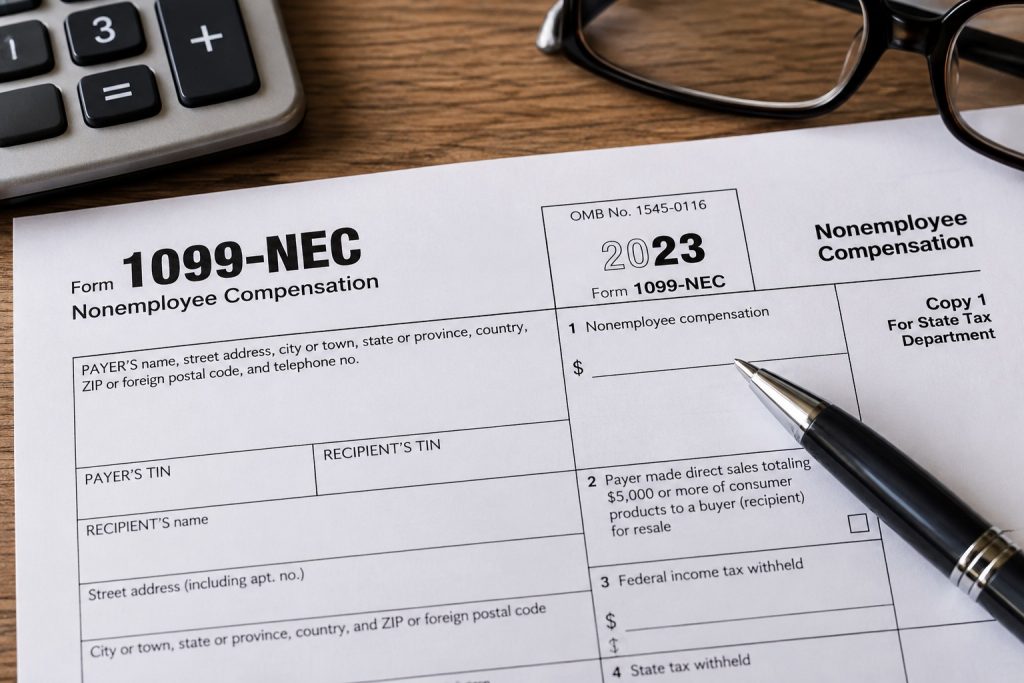
I know many other freelancers who consider estimated tax payments to be one of the most frustrating aspects of their work. I don’t have an employer collecting the right amount of taxes over the year. So, I must guess how much I’ll earn and send the IRS enough by each quarterly deadline. That includes my income, Medicare, and Social Security taxes.
Falling short could mean penalties and interest when filing. That’s on top of the unpaid tax bill itself. To avoid that, I use QuickBooks to track my income from different clients and my freelance business expenses. It shows me an estimated quarterly tax payment that I usually slightly adjust. I then make my estimated federal tax payments online and watch my income in case I need to adjust future payments.
It’s also been helpful to know what the IRS calls the “safe harbor” rule. My freelance income unexpectedly jumped by 40% between 2023 and 2024. Unsurprisingly, my tax liability was also bigger than I expected. To avoid underpayment penalties on 2024 income, I could either pay 90% of what I owed that year or 100% of what I owed in 2023. I still had to pay the full tax bill, but I at least avoided the penalty since I met the “100% of last year” threshold. For an easy way to estimate your taxes, try the H&R Block tax calculator.
Always File My Return Early
Even though taxes are my specialty, spending a few hours filing my own freelance business return isn’t something I necessarily look forward to. But I usually get it over with in February or early March each year for peace of mind and a few money-saving reasons.
For one thing, if I messed up and underpaid, I want to know far before the usual April 15 deadline. That way, I can pay and minimize penalties and interest on the tax bill. Or I can look for any last-minute tax breaks still available for that tax year. One year, I knocked about $300 off my tax bill by making a last-minute retirement contribution.
I also file early as a freelancer in case the IRS owes me money. I don’t see tax refunds as a good thing when I overpaid. As Northwestern Mutual puts it, I basically gave the government an interest-free loan. Ultimately, I would lose some money since it could have earned 3% or more in an online savings account.
Request Penalty Waivers If Things Go Wrong
While I work hard throughout the year so I don’t end up with a tax bill, things don’t always go perfectly with freelancing. No matter what, income can sometimes be unpredictable. Back in 2024, a late-year project pushed my income up so that I lost most of the Premium Tax Credit.
I had no issue paying back that $1,000 I had already received toward my insurance premiums. But this also meant the IRS hit me with an underpayment penalty and interest of about $70. Luckily, I could request a waiver when I filed online. This won’t work for all shortages, but it’s been common for insured people receiving that tax credit.
The IRS website mentions many other options for penalty relief even for failing to file or pay on time. In my experience, though, the IRS is more likely to cut you some slack if it sees you tried to do things right but an unexpected event created issues. I’ve found talking to tax experts helpful when I’m unsure about my options or have questions about a freelancer tax issue.
FAQ
What’s a good amount to set aside for freelance taxes?
Jackson Hewitt suggests 30% of your freelance income. But I’ve gotten by OK with closer to 25% of mine set aside. I recommend looking at your last tax return to get an estimate. Setting aside more is better than less since you can at least avoid penalties for underpayment. I keep my tax money in a high-yield savings account between the quarterly payment dates.
Does the type of freelance business affect tax-saving options?
If your business has more types of expenses or requires more equipment, you might be able to deduct more than a freelance writer and editor like me. Maybe you have a car to deduct as a freelance driver or expensive equipment for a photography business. But it can also go the opposite way if your trade cuts your qualified business income deduction.
What should I do if I can’t afford my tax bill as a freelancer?
This isn’t uncommon for freelancers, and the IRS has different payment plans. You still have to pay interest and penalties, but it’s still better than charging the tax bill to a high-interest credit card. What you don’t want to do is not file your return on time in this situation. That can lead to bigger troubles.
Our articles provide information purely for educational purposes and do not constitute financial, tax or investment advice. You should always consult with professionals like licensed financial advisors or accountants before making any decisions. We aim to provide up-to-date and accurate information, but we make no guarantees regarding the accuracy or completeness of any content. All our examples are provided for illustrative purposes and may not reflect your personal results. We are not liable for any losses or damages arising from your reliance on the information provided.
Sources:
- https://turbotax.intuit.com/tax-tips/self-employment-taxes/top-tax-write-offs-for-the-self-employed/L7xdDG7JL
- https://www.northwesternmutual.com/life-and-money/got-a-tax-refund-3-big-reasons-you-dont-want-one/
- https://www.irs.gov/faqs/estimated-tax/individuals/individuals-2
- https://www.irs.gov/newsroom/qualified-business-income-deduction
- https://www.irs.gov/faqs/small-business-self-employed-other-business/income-expenses
- https://www.irs.gov/payments/underpayment-of-estimated-tax-by-individuals-penalty
- https://www.irs.gov/newsroom/tax-benefits-for-education-information-center
- https://www.spj.org/taxing-matters-on-your-own-a-guide-to-freelance-journalism-society-of-professional-journalists/
- https://www.irs.gov/retirement-plans/ira-deduction-limits
- https://www.healthcare.gov/glossary/premium-tax-credit/
- https://www.irs.gov/businesses/small-businesses-self-employed/estimated-taxes
- https://www.jacksonhewitt.com/tax-help/tax-tips-topics/employment/budget-for-freelance-taxes/
